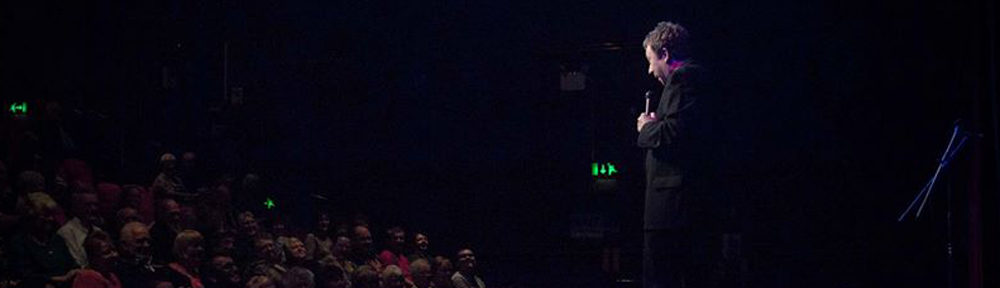
I remember laughing out loud at a joke I heard on TV years ago, although I forget who told it. It could have been Russ Abbot, Les Dennis or the Archbishop of Canterbury.
Anyway, this was the joke that tickled my funny bone . . .
“I’d like to pay my own personal tribute to the late, great Elvis Presley”
(PAUSE)
“Thanks. Elvis!”
Since I heard that joke, unknown singers and bands making a living paying genuine musical tributes to famous performers have become pretty much the backbone of the ‘live’ music scene.
You only have to check what shows are coming to your local theatres and you’ll see that, invariably, in any given week, it’ll be playing host to at least one show – usually more – that’s a tribute to a music icon who is no longer with us ( Roy Orbison, Johnny Cash, David Bowie); are still with us but no longer tour (ABBA, Phil Collins); or are acts that are so big they only play arenas and stadiums (Ed Sheeran, Take That, Taylor Swift etc).
Whatever your opinion of tribute acts, the very best of them build a reputation over time and create their own fanbase, enabling them to return to venues on a regular basis and pack them out.
The truth of the matter is, without them, theatres would be dark several nights a week.
Why is this?
While some venues have sprung up in recent years, many have been around for several decades, like Swansea Grand and the New Theatre Cardiff.
There were very few if any tribute acts around 40/50 years ago. Audiences went to see famous singers and bands – not people pretending to be them.
Fortunately, some music stars still play (and fill) 500-seat theatres. Like Dean Friedman, Steeleye Span and Cardiff’s Andy Fairweather Low, in between his world tours with Eric Clapton.
If you go to see one of the 60s groups still touring, be warned.
It may not be the original line-up.
The last time I saw a famous 60s group perform, I only recognised the drummer.
He was my milkman!
Monthly Archives: April 2026
Traffic Tantrums, Parking Pandemonium. A Proper Welsh Moan (With Extra Spice)
Ah now, gather round mun, because if there’s two things guaranteed to boil the kettle of my soul, it’s traffic and parking.
Not just a mild simmer either, I’m talking full-on, lid-rattling, whistle screaming chaos like Mam’s cooker on a Sunday when the leeks have betrayed her again.
You ever try parking in town these days?
You’d swear the spaces are playing hide and seek.
There I am, doing laps like I’m training for the Welsh Grand Prix, waving politely at the same confused pensioner every third circuit, until, oh joy! a space appears.
Only it’s tighter than a sheep gate in January and comes with a ticket machine that demands your life story, three passwords, and possibly your first-born.
And what do you get for your trouble?
A parking fine slapped on your windscreen quicker than you can say “I was only gone two minutes, butt!”
Honestly, it feels less like a penalty and more like daylight robbery with a clipboard.
Somewhere there’s a council office with a big red button labelled “Fine ‘Em Again,” and I’m convinced they take turns pressing it for fun.
Now don’t get me started on town car parks.
Prices going up faster than a choir note in chapel, while half the shops are sitting emptier than a rugby pub when Wales loses.
It’s like the councils looked at struggling high streets and thought, “You know what would help here? Let’s charge people MORE to visit.”
Genius. Absolute genius. Next they’ll be charging us for breathing near a bakery window.
These poor local businesses, family shops, cafés that know your order before you sit down, places that’ve been there since before colour telly, are scrapping like seagulls over chips just to survive.
And what do we do? Stick up a financial “Keep Out” sign and act surprised when folks head off to retail parks where parking is free and the only stress is choosing between Greggs or . . . Greggs again.
So here’s a cheeky thought, right: before anyone’s allowed near a council seat, a parliament bench, or the Senedd, how about they pass a proper test in business, marketing, and basic common sense?
Nothing fancy, just enough to know that if you charge people a fortune to park, they might . . . I don’t know . . . not come?
Because I’ve had chats, many chats, with local decision-makers, and I’ll be honest, some of them couldn’t run a raffle in a pub with only three tickets sold.
Lovely people, mind.
But understanding how a small town economy ticks? About as likely as a sheep doing your tax return.
If we want our money staying local, buying coffee from Dai, bread from Sian, and questionable DIY supplies from that one shop that sells everything and nothing, we need towns that feel alive. Not ghost towns where the only movement is tumbleweed and a parking warden lurking behind a lamppost like a ninja.
Otherwise, we’ll all end up spending our cash out on the big roads, stuck in traffic, which, as previously mentioned, I loathe with the fiery passion of a dragon denied its tea.
Anyway. Rant over. For now.
Here’s hoping for a future where parking doesn’t require a bank loan, town centres buzz again, and traffic jams are just something we tell the grandchildren about, right after we finally find a parking space.
. . . .still looking, by the way.
THIS CHAT LEFT ME SPEECHLESS
According to the old saying, ‘Talk Is Cheap’.
However, experienced TV interviewers capable of putting their guests at ease and asking lively, intelligent questions can earn eye-watering salaries.
American television spawned late night talk shows, which continue to this day.
Here, Parkinson was a Saturday night regular on BBC One, while ITV’s Saturday nights were brightened-up by Dame Edna Everage’s and Michael Aspel’s shows.
The success of a conversation depends on whether the interviewer can (a) make a guest feel relaxed and (b) appear genuinely interested in what the guest has to say.
Not every talk show host has those abilities, as you’ll know.
Many who thought they could do it, came a cropper, either because they believed they were more interesting than their guests or just wanted to go for laughs.
Clive Anderson’s insultingly crass questions caused The Bee Gees to, justifiably, walk out on him, while Terry Wogan had an excruciating encounter with Anne Bancroft who seemed reluctant to engage with him, possibly because, when Terry interviewed her husband Mel Brooks, the Irish master whimsy tried to out-joke the comedy genius . . . and failed.
I recently watched a strained interview with the author Stephen King, originally known for his horror novels, since when he’s written many equally successful non-horror titles such as “The Shawshank Redemption”.
I may be wrong, but from his body language and occasional sharp-edged question, it seemed the interviewer who’d sat down with the author to discuss his latest novel, had a ‘bit of an attitude’ and Stephen King, being a creative person, instinctively sensed this.
I’ve seen, heard and read previous interviews with Stephen – before and after he was knocked down and severely injured by a truck – and he always came across as genial and open to answering any question.
On this occasion he was more guarded, often questioning why he was being asked certain questions.
Although polite, tellingly, he refrained from offering the traditional end-of-interview handshake.
My personal take from the interview was that talk isn’t cheap.
It has a cost if it makes the person with whom you’re talking feel uncomfortable.
Embracing the Off Days (or: When Even the Sheep Look Happier Than You)
So, here I am, sitting down to write this week’s column, and I’ll be honest, I’m not exactly feeling like my usual sparkling self.
You know those days when your get-up-and-go has got up and wandered off, probably halfway up Pen y Fan without you?
Yes, I’m having one of those.
It’s that kind of day where the kettle’s boiled twice and you still haven’t made the tea, the weather can’t decide between drizzle or full-on sideways rain, and even the sheep look like they’ve got their lives more together than you. (And they definitely know it.)
But here’s the thing I’ve realised: it’s perfectly alright not to be a ray of sunshine all the time.
In fact, if we were all endlessly cheerful, we’d be unbearable. A bit of “meh” now and then is just part of the deal.
When those low, wobbly moments creep in, like rain just after you’ve hung the washing out, I try to pause and notice the small wins.
Waking up. A bit of fresh air. A glimpse out the window, even if it’s 50 shades of grey. It sounds simple, but sometimes that’s enough.
And, honestly, have you ever thought about air? It’s completely free, always available, and doesn’t need charging. You can’t say that about much these days.
Self-care gets talked about a lot, but it really does matter. With everything going on, it’s no wonder we feel a bit deflated sometimes. So give yourself a break. Switch off the phone, step away from the noise, and spend time with people who make you feel like you again.
Have a proper laugh. Or better yet, have a good cwtsh, the kind that sorts you out better than any life advice ever could.
At the end of the day, not every day has to be productive or perfect. Some days are just about getting through, and that’s more than enough.
And if all else fails?
Chocolate!
Because around here, that absolutely counts as self-care.
CHECK-OUT THESE IN-STORE ENCOUNTERS
When I started out performing stand-up, I once arrived at a club having, foolishly, not eaten since breakfast, 12 hours before.
Standing in the wings, light-headed and nauseous, I turned to the promoter and said, “I feel funny”. He replied, “Well get on before it wears off”.
Lesson learnt, I’ll get on with this while I still feel funny.
Last Saturday, as I was just about to walk into a supermarket, a lady approached me.
Middle-aged and well-dressed, she had the demeanor of a model and the suspicion of a moustache.
She said, “Excuse me! Are you local?” and I gave her a friendly smile and replied, “Well, that depends on where I am at the time”.
Unfazed by my brilliant shaft of wit, she asked, “Is there a B & Q in Ammanford?”
I said, “No. There’s two As, two Ms, an N, an F, an O, an R and a D”.
When she explained she urgently needed cream paint, I said, “Matt?”. To which she replied, “No, my name’s Gloria”.
When I told her I thought the supermarket had cream paint on aisle 5, she thanked me and wandered off.
After I’d finished shopping, I stood in the queue at the check-out and couldn’t help but notice that the man standing immediately in front of me was covered from head to toe in baby oil. He was plastered in the stuff.
Being British, I naturally didn’t make eye contact with him, speak to him or react to the unmistakable odour wafting across from two feet away.
After he’d paid for his purchases and was well out of earshot, I said to the lady at the till, “Do you know that man who was covered in baby oil?”
In hushed tones, she replied, “No, I’ve never seen him before. But if you ask me, he’s a bit of a slippery customer!”
Then the lady who wanted cream paint came up to me again and said, angrily, “The cream paint wasn’t where you said, you plonker! You sent me to the aisle of white!”
You just can’t help some people, can you?
The Great Welsh Easter. Eggs, Enthusiasm and Excellent Chaos
Last Easter weekend across Wales was a masterclass in cheerful disorder, as communities fully embraced the annual tradition of eating their body weight in chocolate while pretending it’s “for the children.”
From Carmarthenshire to Conwy, kitchens became production lines of hot cross buns, each one judged with the seriousness of a national competition.
Meanwhile, parents across the country demonstrated remarkable creativity in hiding Easter eggs, only to watch their efforts unravel within minutes thanks to children possessing the tracking instincts of elite detectives.
Village events delivered their usual charm.
One egg-and-spoon race ended in dramatic fashion when a competitor, clearly aiming for Olympic glory, took a corner far too aggressively and scattered both egg and dignity across the field.
Spectators applauded anyway, because in Wales, commitment always beats coordination.
Elsewhere, local choirs filled halls with song, proving once again that a perfectly harmonised chorus can elevate even the most chaotic of weekends.
Nearby, tea flowed endlessly, accompanied by enough cake to sustain a small nation.
Perhaps the most uplifting sight of all was the unmistakable sense of togetherness. Neighbours shared laughter, families gathered with gusto, and strangers quickly became co-conspirators in the great chocolate surplus.
Because in Wales, Easter isn’t just a holiday, it’s a joyful celebration of community, enthusiasm, and the unshakeable belief that there’s always room for one more slice of cake.
And, honestly, there always is.